- Solar Guides
Solar Panel Repair in 2026: Costs, Common Problems & 5 Smart Tips
Solar panel repair can help homeowners restore lost electricity production, address equipment faults, and protect their investment in renewable energy. But when a solar system stops performing normally, the problem isn’t always a damaged panel.
A faulty inverter, loose electrical connection, damaged wiring, or malfunctioning monitoring system can all affect solar performance. Some issues require relatively minor repairs, while severely damaged photovoltaic modules may need complete replacement.
According to Angi’s July 2026 cost data, solar panel repairs in the United States average approximately $861, with many projects costing between $238 and $1,487. Actual costs depend on the damaged equipment, labor requirements, accessibility, and location.
Before paying for repairs, homeowners should understand the likely cause, check their warranties, and compare the cost of fixing the problem against replacing the affected equipment.
This guide explains common solar panel problems, 2026 repair costs, safe troubleshooting steps, and five practical ways to reduce unexpected repair expenses.
What Is Solar Panel Repair?
Solar panel repair refers to diagnosing and correcting problems that prevent a photovoltaic (PV) system from operating safely or producing electricity as expected.
Although the term focuses on solar panels, repair services may involve several different components:
Solar panels and their electrical connections
String inverters or microinverters
Wiring, connectors, and protective devices
Mounting brackets and roof attachments
Monitoring equipment and communication systems
Weather-damaged components
Not every malfunction requires replacing a solar panel.
For example, a functioning solar array might stop delivering usable electricity because its inverter has failed. Replacing the inverter could restore operation without changing any of the panels.
The U.S. Department of Energy identifies inverter failures, module damage, wiring faults, and monitoring problems among the important issues encountered during solar system operation.
Source: U.S. Department of Energy — Optimizing Solar Photovoltaic Performance for Longevity
7 Common Solar Panel Problems and Warning Signs
Recognizing the warning signs early can help you arrange the right inspection and avoid spending money on unnecessary replacements.
1. Solar Panels Producing Less Electricity
A noticeable reduction in solar energy production is one of the most common reasons homeowners investigate their systems.
Possible causes include:
Heavy shading from nearby trees
Dirt, pollen, or bird droppings
Inverter or electrical problems
Damaged or underperforming panels
Temporary monitoring errors
Normal seasonal changes
Lower production does not automatically indicate a fault.
A cloudy month may generate considerably less electricity than a sunny one. Compare production over similar seasons and weather conditions before assuming equipment has failed.
2. Cracked or Broken Solar Panel Glass
Solar panels are built to withstand outdoor weather, but severe hail, falling branches, or other impacts can damage their protective glass.
Signs of damage may include visible cracks, shattered glass, unusual discoloration, or exposed internal materials.
Even if a cracked panel continues producing electricity, its weather protection and electrical safety may be compromised.
Do not touch, tape, seal, or attempt to repair broken panel glass yourself. Contact a qualified solar professional for an assessment.
3. Solar Inverter Problems
The inverter converts direct-current electricity from solar panels into alternating-current electricity that can be used in your home.
A malfunctioning inverter may cause:
Zero or unexpectedly low energy output
Persistent error messages
Repeated shutdowns
Lost system monitoring
Intermittent electricity production
Sometimes the issue is related to communication or a temporary operating condition. Other faults require specialist diagnosis or equipment replacement.
4. Loose or Damaged Wiring
Solar wiring can be affected by rodents, weather exposure, installation defects, or aging components.
Damaged wiring may result in interrupted production, ground faults, or other electrical hazards.
Because solar panels can produce electricity whenever illuminated, wiring and connector repairs should always be handled by a qualified technician.
5. Hot Spots and Internal Panel Damage
A hot spot is an area of a photovoltaic module that becomes unusually hot relative to surrounding cells.
Potential contributing factors include damaged cells, electrical mismatches, or other module defects.
Professional technicians may use thermal imaging and electrical testing to identify suspected hot spots.
Homeowners should not attempt thermal or electrical testing on the roof themselves.
6. Water Intrusion and Corrosion
Moisture entering electrical components may cause corrosion, insulation problems, or system failures.
Water intrusion can affect connectors, junction boxes, inverters, and other parts of the installation.
Visible corrosion, damaged cable insulation, or water inside an electrical enclosure should be assessed promptly.
7. Loose Mounting Hardware or Roof Damage
Solar equipment relies on secure attachments to withstand wind and weather.
A technician may need to investigate:
Loose mounting brackets
Damaged rails or clamps
Corroded fasteners
Roof leaks near attachments
Damage following a major storm
Roof leaks are not necessarily caused by the solar panels themselves. Identifying the source may require both a qualified roofing contractor and a solar technician.
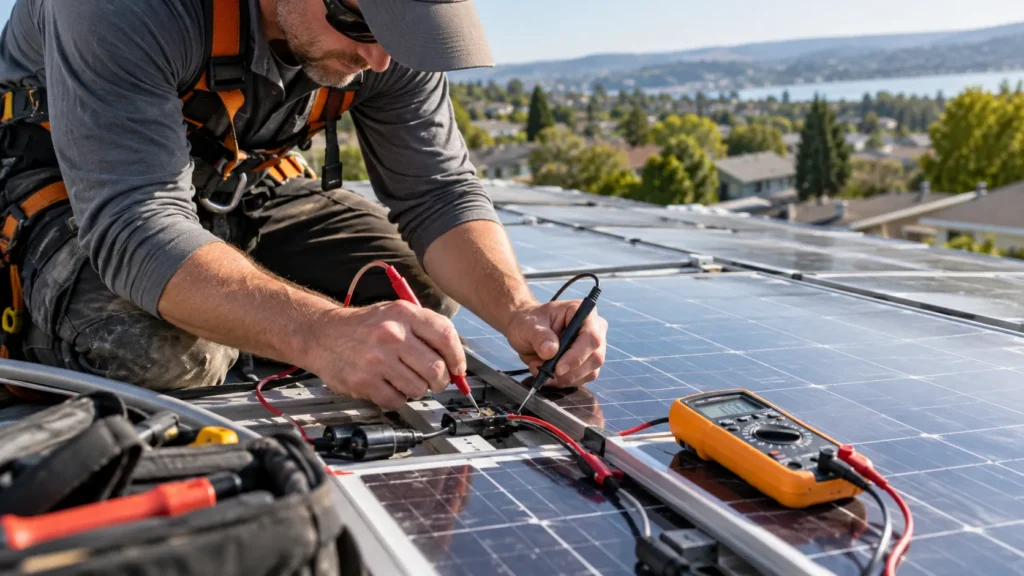
How Much Does Solar Panel Repair Cost in 2026?
The solar panel repair cost varies depending on whether the issue involves an inexpensive component, a damaged module, or a major piece of electrical equipment.
Based on Angi’s 2026 national pricing guide, typical total repair spending is around $861, although individual jobs may fall well below or above that amount.
Solar Panel Repair Cost Breakdown
| Repair Type | Published 2026 Cost Range |
|---|---|
| Fuse replacement | $100–$150 |
| Loose or damaged wiring | $100–$400 |
| Corrosion-related repair | $150–$350 |
| Cracked panel assessment or repair work | $120–$550 |
| Broken panel replacement work | $200–$550 |
| String inverter replacement | $800–$2,500 |
| Microinverter replacement | $150–$350 |
| Professional system inspection | $150–$300 |
Source: Angi — Solar Panel Repair Costs (2026)
These are indicative US pricing ranges, not guaranteed quotations. Some estimates may exclude additional diagnostic visits, panel removal, difficult roof access, electrical upgrades, or replacement equipment.
Costs can also overlap. For example, a damaged panel with faulty wiring may require both types of work.
Important: A price category for cracked-glass repair does not mean every cracked panel is safe or suitable for sealing. A technician must determine whether replacement is necessary.
What Affects the Final Repair Bill?
Several factors can change the amount you pay.
Type of damage: Replacing a faulty connector is generally less expensive than replacing a large inverter or multiple photovoltaic modules.
Roof accessibility: Steep roofs, multi-story homes, and restricted access can require additional labor and safety equipment.
Equipment availability: Older panel models and discontinued inverter components may be harder to source.
Labor rates: Repair costs can differ considerably between US cities and regions.
Warranty coverage: An approved manufacturer warranty may cover defective parts, although labor and shipping may still be charged.
Multiple faults: A storm-damaged system might need panel replacement, wiring work, mounting repairs, and roof repairs.
Example: A Simple Solar Repair Budget
Consider a homeowner who receives the following illustrative quote:
| Expense | Example Cost |
|---|---|
| Technician inspection and diagnosis | $175 |
| Replacement electrical component | $125 |
| Repair labor | $150 |
| Total | $450 |
This is a hypothetical example—not a national average or actual contractor quote.
It shows why homeowners should request an itemized estimate rather than relying on a single advertised repair price.
Can Solar Panels Be Repaired?
Yes, some solar system problems can be repaired. But the answer depends on which component has failed and how serious the damage is.
External electrical components, wiring, monitoring equipment, and mounting hardware can often be repaired or replaced independently.
The photovoltaic module itself is different.
Modern solar panels are manufactured as sealed assemblies designed to protect their cells and electrical connections from moisture and weather.
A severely damaged panel may not be safely repairable in the field.
What About Cracked Solar Panel Glass?
Some minor-looking marks may be superficial, while others indicate damage to the protective glass or underlying cells.
A homeowner cannot reliably distinguish between harmless surface marks and electrically significant damage from appearance alone.
If the glass is cracked, a professional should inspect the module and determine whether it remains suitable for service.
For serious cracking, shattered glass, exposed conductors, or moisture intrusion, module replacement is often the safer and more practical solution.
Avoid DIY epoxy, glue, or tape repairs. Sealing a crack does not necessarily restore the panel’s original electrical insulation, weather resistance, or safety certification.
Can Damaged Solar Cells Be Fixed?
Repairing individual cells inside a finished solar module is generally not a practical residential field service.
If cell damage substantially affects safety or performance, replacement of the complete module may be recommended.
The situation is different from replacing an external connector or inverter, where a component can often be serviced without rebuilding the module.
Can Solar Inverters Be Repaired?
Some inverter faults can be resolved through an approved service procedure, firmware update, or replacement of a serviceable component.
However, smaller residential string inverters and microinverters are often replaced as complete units when they fail.
The correct approach depends on the fault, manufacturer warranty, and availability of replacement parts.
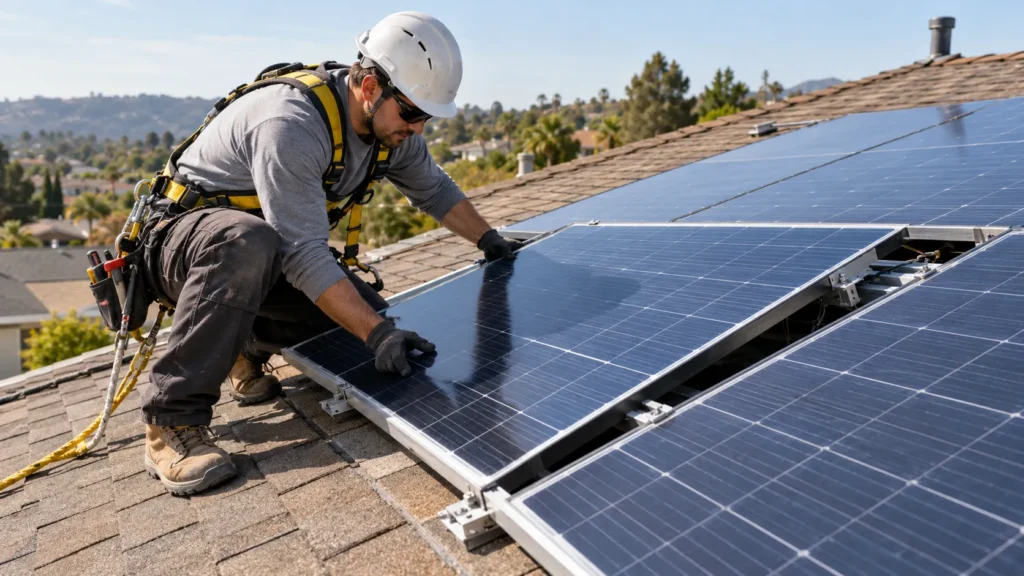
Solar Panel Troubleshooting: What Homeowners Can Check Safely
Basic solar panel troubleshooting starts with observing the system, not opening electrical equipment.
Here is a safe process to follow before arranging service.
Step 1: Check Your Solar Monitoring App
Open the monitoring application provided by your installer or equipment manufacturer.
Look for:
System offline notifications
Unusual production drops
Inverter alerts
Individual panel or microinverter errors, if supported
Missing historical data
A communication failure can sometimes make a working system appear offline.
Record any error messages before contacting support.
Step 2: Compare Historical Production
Look at solar production from comparable periods.
For example, comparing one sunny summer afternoon with a cloudy winter morning will not provide a meaningful diagnosis.
Instead, compare monthly or daily output under reasonably similar sunlight conditions.
If the system normally produces around 900 kWh in a particular month but produces only 700 kWh under comparable conditions, further investigation may be appropriate.
Step 3: Check for Visible Changes From the Ground
From a safe location, look for obvious changes such as fallen branches, heavy debris, visible storm damage, or new shading.
Do not climb onto the roof or touch damaged electrical equipment.
Step 4: Review Your Warranty and Installer Documents
Find your installation agreement, panel model information, inverter warranty, and service contact details.
A system still under warranty may qualify for manufacturer or installer assistance.
Step 5: Contact a Qualified Solar Professional
If the system shows persistent faults, reduced production, or visible damage, arrange a professional inspection.
A technician may need to conduct electrical measurements, thermal imaging, insulation testing, or manufacturer-approved diagnostics.
Safety warning: Do not disconnect rooftop DC connectors, open electrical enclosures, or attempt live electrical tests. Solar arrays can remain energized in sunlight, even when other equipment has been switched off. If you see smoke, sparking, or signs of fire, keep clear and contact emergency services.
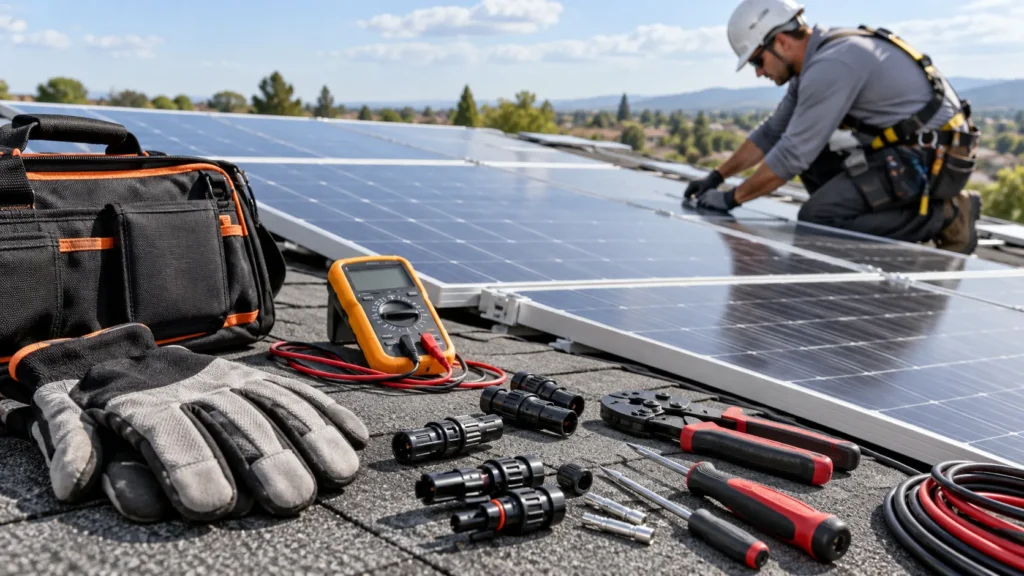
Solar Panel Repair vs Replacement: Which Is Better?
The decision between solar panel repair vs replacement depends on the nature of the fault, expected remaining lifespan, cost, and available warranty coverage.
| Situation | Common Approach |
|---|---|
| Faulty external connector | Professional repair or replacement |
| Loose mounting hardware | Professional inspection and correction |
| Damaged wiring | Repair or replace affected wiring |
| Inverter failure | Repair or replace inverter according to manufacturer guidance |
| Severely cracked module glass | Usually replace the module |
| Major internal cell damage | Usually replace the module |
| Multiple old, failing modules | Compare targeted replacement with wider system upgrades |
| Small production drop caused by dirt or shade | Address soiling or shading before assuming equipment failure |
When Repair Makes More Sense
Repair may be the better choice if:
The fault is limited to a serviceable external component.
The panels themselves are still working normally.
The total repair cost is substantially below replacement cost.
Replacement parts are available and compatible.
The existing system has useful remaining service life.
When Replacement Makes More Sense
Replacement deserves consideration when:
A module has severe physical damage.
Moisture or electrical damage cannot be safely corrected.
A required replacement part is no longer available.
Several components are reaching the end of their service life.
The repair cost approaches the price of a suitable replacement.
A replacement panel must also be electrically compatible with the existing array, inverter, and system design. A technician should confirm compatibility rather than simply installing the highest-wattage panel available.
Example: Estimating the Value of Restored Solar Production
Suppose a solar system should generate 9,000 kWh annually under a chosen planning scenario, but a fault reduces its expected output to 7,200 kWh.
Estimated lost generation:
9,000 − 7,200 = 1,800 kWh per year
If every recovered kilowatt-hour is worth an illustrative $0.18, the maximum estimated annual electricity value would be:
1,800 × $0.18 = $324 per year
If a qualified professional can fix the issue for $450 and restore all that lost output:
$450 ÷ $324 = approximately 1.4 years
Under those assumptions, the repair cost could be recovered through additional electricity value in about 1.4 years.
However, real savings depend on self-consumption, utility export compensation, weather, system performance, and whether the repair fully resolves the problem.
This calculation should not be used without first identifying the actual fault.
Use the Solar Production Calculator to estimate electricity generation and our Solar ROI Calculator to explore longer-term financial scenarios.
Both tools provide planning estimates, not a diagnosis of faulty equipment.
5 Smart Tips to Avoid Expensive Solar Panel Repairs
Preventive care can help keep a photovoltaic system functioning properly and make unexpected faults easier to identify.
1. Monitor Your Solar Production Regularly
Check your monitoring dashboard periodically instead of waiting for a noticeably higher electricity bill.
Record unusual changes, repeated inverter faults, or prolonged outages.
The sooner a genuine problem is identified, the sooner a professional can assess it.
2. Keep Panels Clear of Excessive Debris
Solar panels generally require limited cleaning, but dust, pollen, leaves, and bird droppings can reduce energy production in some environments.
Cleaning frequency depends on rainfall, local pollution, roof conditions, and manufacturer recommendations.
Avoid abrasive materials, pressure washing, or harsh chemicals.
For hard-to-reach rooftop panels, professional cleaning is the safer option.
Read our guide to Solar Panel Maintenance Cost for additional budgeting information.
3. Arrange Inspections When Necessary
A professional inspection may be appropriate after severe weather, persistent error messages, visible damage, or unexplained output losses.
Depending on system age and local conditions, periodic inspections can also help identify deterioration before it causes a larger failure.
Ask the inspector to check electrical connections, mounting hardware, signs of corrosion, and inverter performance.
4. Protect Wiring and Equipment From Damage
Rodents, falling branches, water intrusion, and loose exterior equipment can create avoidable problems.
Keep nearby vegetation managed from safe ground-level areas, and ask your installer about appropriate pest protection or cable management where necessary.
Do not install covers, guards, or other modifications that interfere with airflow, drainage, electrical clearance, or manufacturer requirements.
5. Maintain Warranty and Service Records
Keep copies of:
Original installation contract
Panel and inverter model numbers
Product warranty documents
Installation and commissioning records
Maintenance and inspection reports
Previous repair invoices
These records can make warranty claims easier and help future technicians understand the system.
Regular maintenance may reduce avoidable problems, but it cannot eliminate equipment failures or guarantee a particular lifespan.
Is Solar Panel Repair Covered by Warranty or Insurance?
Some solar repairs may be covered by warranties or homeowner insurance, depending on the cause of the damage.
Solar Panel Product Warranty
A product warranty generally covers qualifying manufacturing defects or equipment failures.
Warranty terms differ by brand and model. Some products offer 10–12 years of protection, while others offer 25 years or longer.
Coverage may exclude impact damage, improper installation, unauthorized modifications, or other specified conditions.
Solar Panel Performance Warranty
A performance warranty typically guarantees that a module will maintain at least a specified percentage of its original rated output over time.
This does not mean the manufacturer automatically pays for every repair whenever your electricity bill increases.
Performance claims usually require testing under defined conditions and compliance with the warranty process.
Installer Workmanship Warranty
An installer may provide a separate warranty for qualifying installation defects.
This can be relevant to mounting problems, certain electrical connections, or roof penetrations, depending on the contract.
Homeowners Insurance
Some homeowners insurance policies may cover solar equipment damaged by covered events such as hail, storms, or falling objects.
However, coverage depends on whether the system is owned or leased, policy exclusions, deductibles, and any applicable endorsements.
Normal wear, poor maintenance, and manufacturing defects may be treated differently.
Before arranging major repairs, check whether the manufacturer, installer, or insurer requires prior authorization.
For further reading, see EnergySage’s Solar Panel Warranty Guide.
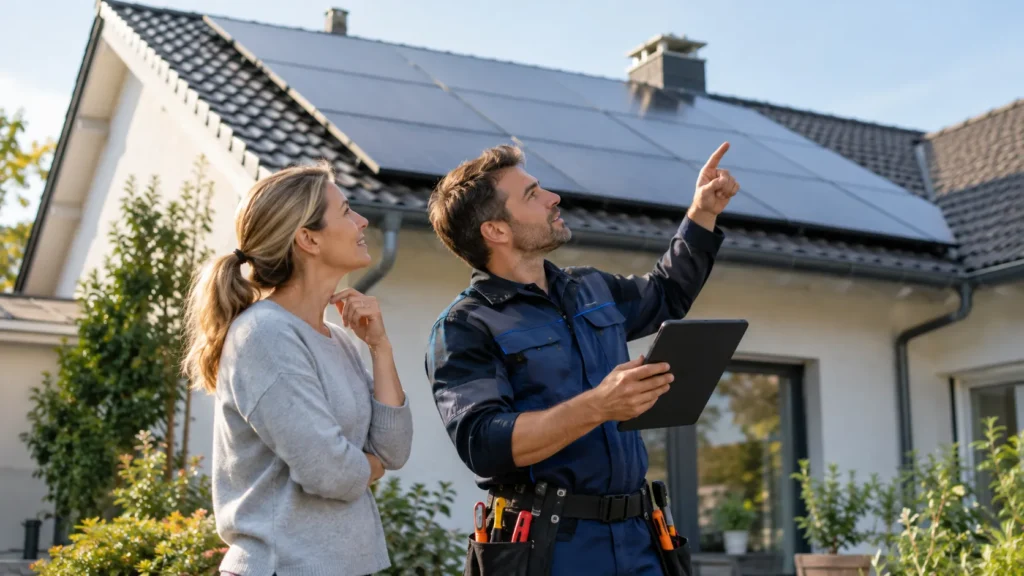
How to Choose a Reliable Solar Panel Repair Company
A qualified contractor should diagnose the cause of the problem before recommending expensive replacement work.
When looking for a solar repair professional in the United States, compare at least two estimates when practical.
Ask the following questions:
Are you appropriately licensed and insured for the electrical and roofing work required in my area?
Do you have experience with my inverter and solar panel brands?
Can you provide an itemized diagnosis and repair estimate?
Will the repair affect any existing warranties?
Does the price include testing, labor, parts, and required permits?
What warranty do you provide on the repair work?
Can you document system performance after the repair?
Your original solar installer is often a useful first contact, particularly if the system is still covered by an installation or workmanship warranty.
If that company is no longer operating, contact the equipment manufacturer to ask about authorized service options.
How Long Should Solar Panels Last Before Needing Repair?
Quality solar panels are designed for long-term operation, often supported by performance warranties lasting approximately 25 years or more.
That does not mean every solar system will operate without needing service for 25 years.
Inverters, electrical equipment, monitoring systems, and other components may need attention earlier.
The U.S. Department of Energy notes that inverter problems account for a significant share of photovoltaic system maintenance and downtime.
Panels also gradually lose some generating capacity over time. Normal degradation should not be confused with a sudden equipment fault.
For more information, read How Long Do Solar Panels Last on a Roof?.
Frequently Asked Questions
How much does solar panel repair cost in 2026?
According to Angi’s July 2026 US data, the average repair cost is approximately $861, with many projects ranging from $238 to $1,487. Minor component repairs may cost less, while inverter replacement, difficult roof access, or extensive damage can cost more.
Can solar panels be repaired instead of replaced?
Some solar system faults can be repaired without replacing the panels. External wiring, connectors, inverters, and mounting components may be serviceable. However, severely cracked glass or damaged cells often make complete module replacement more appropriate.
Can a cracked solar panel still work?
Yes, some cracked panels may continue producing electricity. That does not establish that they are safe. Cracked glass can compromise protection against moisture and electrical hazards, so a qualified professional should evaluate the panel.
Is it safe to repair solar panels yourself?
No. Rooftop solar repairs can involve electrical shock, fire, and fall hazards. Basic monitoring and visual observation from a safe location are reasonable, but electrical testing, panel removal, and component repair should be performed by qualified professionals.
Why is my solar system producing less electricity?
Possible reasons include seasonal sunlight changes, shading, dirt, inverter faults, wiring problems, or panel damage. Check monitoring records and compare similar weather conditions before concluding that a component has failed.
How much does it cost to replace a solar inverter?
Angi’s 2026 guide estimates approximately $800–$2,500 for a residential string inverter replacement and $150–$350 for a microinverter replacement. Actual costs depend on equipment, labor, compatibility, and warranty coverage.
Does homeowners insurance cover broken solar panels?
It may, depending on the cause of damage and your policy. Certain covered weather events may qualify, while normal deterioration or excluded causes may not. Review your policy and contact your insurer before assuming coverage.
Is it better to repair or replace an old solar panel?
Repair may be economical when the fault involves an inexpensive serviceable component. If the module has severe damage or replacement costs are similar to repair costs, replacement may be the better option. A qualified technician should also check electrical compatibility.
How often should solar panels be inspected?
There is no universal inspection interval suitable for every household. Consider manufacturer guidance, installer recommendations, system age, local weather, and any performance warnings. Severe storms, visible damage, and persistent faults justify timely professional assessment.
Do solar panels need regular maintenance?
Solar panels generally require limited maintenance, but homeowners should monitor production and arrange cleaning or inspections when conditions justify them. Inverters, wiring, roof attachments, and other system components also need attention when problems arise.
Final Thoughts: Is Solar Panel Repair Worth It?
Solar panel repair is often worthwhile when a qualified technician can restore safe system operation at a cost substantially below replacement.
But the right choice depends on the component involved.
A wiring repair or inverter replacement may restore electricity production without replacing functional solar panels. Severe physical module damage, on the other hand, may justify complete replacement.
For homeowners, the smartest approach is to check system performance, identify the actual fault, review warranty coverage, and obtain a professional diagnosis before committing to expensive work.
If you’re estimating how a solar repair might affect your electricity savings, explore these free SolarSizeCalc resources:
Solar Production Calculator — Estimate expected solar electricity generation.
Solar ROI Calculator — Explore long-term solar savings and expenses.
Solar Cost Calculator — Compare approximate costs of new conventional solar installations.
Solar Panel Maintenance Cost Guide — Understand ongoing solar maintenance expenses.
Remember: Solar panels can generate electricity whenever they are exposed to sufficient light. Never attempt electrical or rooftop repairs without the appropriate professional training and safety procedures.
Sources and Further Reading
U.S. Department of Energy — Optimizing Solar PV Performance for Longevity
U.S. Department of Energy — Solar Operations and Maintenance Resources
U.S. Department of Energy — Should I Replace My Rooftop Solar System?
Disclaimer: This article provides general educational information for US homeowners. Repair costs are published market estimates, not guaranteed prices. Electrical safety, roofing requirements, warranty conditions, and insurance coverage depend on individual circumstances. Consult qualified professionals for inspection, diagnosis, and repairs.