- Off-Grid Solar Calculator
Off-Grid Solar Calculator
Estimate the solar panels, battery storage, and inverter capacity needed for your home, cabin, or off-grid setup. Enter your energy use and sunlight conditions to plan a system that fits your needs.
- Free to use
- Battery and solar sizing
- Instant estimate
Off-Grid Solar Calculator
Estimate solar panels, battery-bank size and inverter capacity using your energy needs and available sunlight.
Your estimated system
Preliminary sizingBased on selected W/panel
Daily kWh ÷ sun hours ÷ performance ratio
Includes autonomy, DoD & delivery loss
Nominal bank amp-hours
25% headroom above simultaneous load
Check inverter surge rating & duration
Preliminary amps; not MPPT device sizing
Excludes storage, inverter, labor, permits
This is an educational energy-balance estimate, not an engineered equipment specification or a complete installation quote.
How to Use the Calculator
Follow these three practical steps to plan your off-grid solar array, battery bank, and inverter specifications.
STEP 01
Enter Your Energy Needs
Enter your daily electricity use in kWh and your highest simultaneous appliance load in watts. Use actual bills or an appliance list for a more reliable starting estimate.
STEP 02
Choose Your System Settings
Choose your peak sun hours, backup days, battery type, and panel wattage. Adjust efficiency assumptions to reflect the location and equipment you plan to use.
STEP 03
Review Your System Estimate
Review the estimated solar array, panel count, battery capacity, inverter size, and controller current. Use these results as a planning guide, not a final equipment specification.
Understanding Your Results
Understand what each result means and how it helps you plan a practical off-grid solar system.
Solar Array Size (kW)
Shows the solar panel capacity required to meet your daily energy use based on available peak sun hours and assumed system losses. Seasonal weather and shading can change the final design.
Number of Solar Panels
Estimates how many panels are needed using your selected panel wattage. The result rounds up to whole panels, so installed capacity may be slightly higher than the calculated array size.
Battery Storage (kWh)
Estimates battery capacity from daily energy demand, backup days, battery efficiency, and usable depth of discharge. Actual capacity depends on battery chemistry, temperature, and manufacturer limits.
Inverter Power (W or kW)
Estimates the inverter’s continuous power requirement using your expected simultaneous appliance load. Motors and compressors may need extra startup surge capacity beyond the displayed continuous-power estimate.
MPPT Charge Controller Considerations
Provides a preliminary charge controller current estimate based on your solar array capacity and selected battery voltage. Final MPPT selection must also consider PV string voltage, cold-weather voltage limits, maximum charging current, battery compatibility, and manufacturer specifications to ensure safe, reliable system operation.
How Off-Grid Solar Sizing Works
An off-grid solar calculator helps estimate the solar capacity and battery storage needed for daily electricity use. Solar panels must generate enough energy for your home, while batteries provide power at night and during cloudy weather.
Basic Solar Array Sizing Formula
Solar Array Size (kW) = Daily Energy Use (kWh) ÷ (Peak Sun Hours × System Efficiency)
Practical Example
Suppose your home uses 12 kWh per day, receives 5 peak sun hours, and has an assumed overall system efficiency of 75%.
12 ÷ (5 × 0.75) = 3.2 kW
That equals eight 400 W panels before additional design margin. Actual requirements may increase due to seasonal conditions, shading, or extra battery charging needs.
Use this off-grid solar calculator to adjust daily consumption, sunlight, and battery settings for your own energy needs.
Daily Energy Use: Daily energy use is measured in kWh. Add the electricity consumed by the appliances you plan to run throughout a typical day, including nighttime loads.
Peak Sun Hours: Peak sun hours represent equivalent full-strength sunlight, not total daylight hours. Use location-specific data and consider the months with the lowest solar production.
Battery Backup Days: Backup days determine how long stored energy should supply your appliances during cloudy weather. More backup time generally requires a larger usable battery capacity.
System Efficiency: Actual solar output varies with temperature, shading, panel direction, wiring losses, and equipment efficiency. These factors should be considered when estimating the required system capacity.
For location-based solar energy production estimates, explore the NLR PVWatts Calculator.
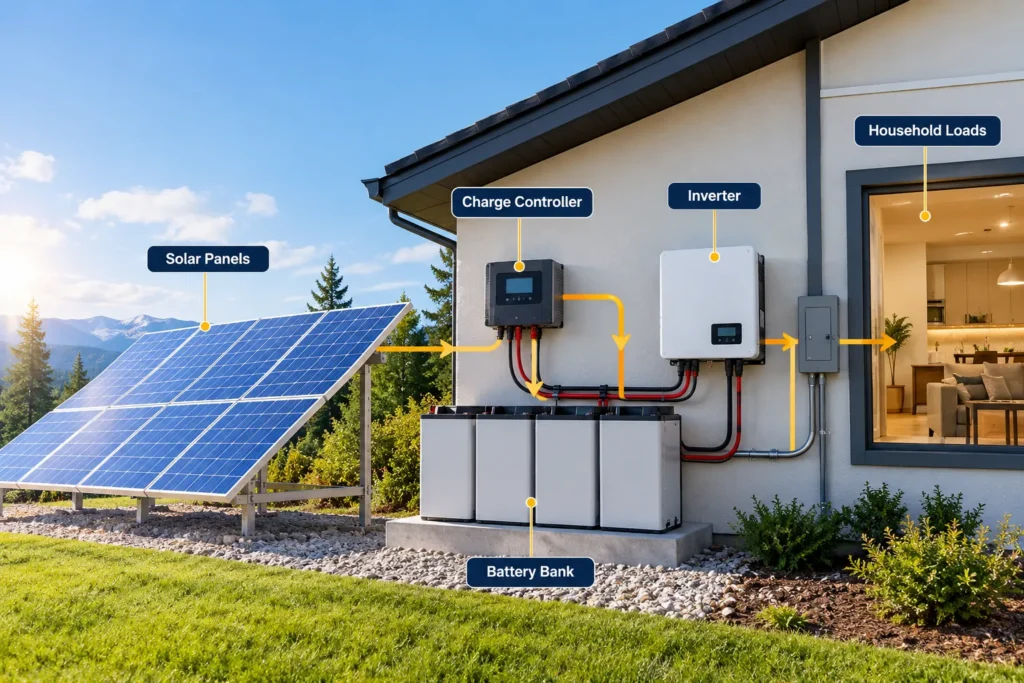
Solar Energy System Flow
Understand how electricity moves through the main components of an independent off-grid solar system.
1. Solar Panels
Capture sunlight and generate DC electricity.
2. Charge Controller
Regulates solar charging to protect the battery.
3. Battery Bank
Stores electrical energy for later use.
4. Solar Inverter
Converts DC electricity into usable AC power.
5. Household Loads
Use electricity to operate household appliances.
Real installations also require appropriate wiring, electrical protection, grounding, disconnects, and compatible equipment.
Frequently Asked Questions
Clear answers to common questions about off-grid solar panels, battery storage, and system sizing.
How do I calculate my off-grid solar system size?
Start with the electricity you use each day in kWh. Divide that by peak sun hours and an appropriate system-efficiency factor to estimate the solar array. Then size the battery bank for your backup days and check the inverter against your simultaneous appliance loads.
How many solar panels do I need to live off grid?
The number depends on your daily electricity use, local sunlight, and chosen panel wattage. For example, a 3.2 kW array needs eight 400 W panels before any additional design margin. Cloudy months, shading, and battery charging needs can increase the final number.
How much battery storage does an off-grid home need?
Multiply your daily kWh use by the number of backup days to find the energy you need to store. Then account for battery efficiency and usable depth of discharge. A battery bank’s rated kWh is usually higher than the energy you can safely use.
What is the difference between solar array and inverter size?
Solar array size describes how much power your panels can produce under rated conditions. Inverter size describes how much AC power your appliances can draw at once. Choose an inverter for continuous loads and startup surges, not simply to match panel capacity.
Can a house run completely off grid with solar power?
Yes, provided the panels, storage, and inverter are sized for the home’s real electricity use and local conditions. Reliable off-grid operation also requires planning for winter sunlight, several cloudy days, equipment losses, and unusually high appliance demand.
Does this calculator estimate installation costs?
Any displayed cost is an illustrative planning estimate, not a contractor quote. Actual costs vary by location, battery capacity, inverter choice, electrical protection, installation labor, permits, and equipment quality. Request a detailed local quote before purchasing components.
Related Solar Calculators
Explore these free tools to plan your solar energy system with more detailed estimates.
Estimate battery capacity, usable storage, and backup requirements for a solar system using your energy needs and battery settings.
Find typical appliance wattages and estimate daily electricity consumption before sizing an off-grid solar or battery system.
Estimate how much electricity your solar array may produce using system size, sunlight conditions, and performance assumptions.
Important: These calculations provide preliminary planning estimates. Final system sizing must account for local conditions, equipment specifications, applicable electrical codes, and professional verification.